

There are four things I look for in yarn I’m going to use for socks before I look for nylon.
Is it superwash or nonsuperwash yarn?
What is the fiber content?
How many plys are in the yarn?
How tightly is the yarn twisted?
If I’m honest, numbers three and four are even more important to me than number two. But let’s go through this point by point.
Nonsuperwash vs superwash yarn. Is one better than the other? It depends on your criteria, but if we’re talking durability alone, I’d say it’s a pretty even playing field. As long as the superwash yarn has nylon in it. But non-superwash doesn’t need nylon. Why? Because the natural qualities of the yarn that make it strong haven’t been stripped away. In making superwash yarn, we are stripping away the microscopic scales on the outside of the fiber that give it so much of its strength. When those scales are burned off or glued down so the yarn won't felt, the fibers slide apart more easily. When we do that, we need to supplement the fiber with nylon or a much tighter twist to re-establish the strength we’ve taken away.
Fiber content. There are two factors that go into fiber strength: micron count and staple length. The micron count is the diameter of the fiber and the staple length is the length of each strand being brought together and made into yarn. The wider the diameter and the longer the staple length, the stronger the yarn. However, go too wide and too long and you have a recipe for itchy, uncomfortable yarn. So I look for a happy medium of what fibers land in the moderate zone where we have both strength and softness.
Fibers like Bluefaced Leicester (BFL) and Corriedale hit this sweet spot perfectly. They have a moderate micron count (around 24–30 microns), meaning they are thick enough to resist abrasion in your shoe but soft enough to wear comfortably. They also boast a longer staple length (3–6 inches). A longer staple means fewer individual fiber ends stick out of the spun yarn to break or pill.
You might also see blends like a Merino-Rambouillet mix. Mechanically, these are actually fine, short fibers (19–23 microns and just 2–4 inches long), making them inherently more delicate. However, Rambouillet brings an incredible, bouncy crimp that creates exceptional elasticity for cuffs and gussets. If you use a delicate fiber like this, you'll still get good wear out of it, as long as the next requirement is met.
Ply and twist. Let’s talk about these together. Ply is a fancy way of saying thread. When we talk about yarn ply, we mean how many individual strands of thread are used to make the yarn. Single ply is usually shiny and soft, but pills easily and lacks durability. Great for things you’ll wear that don’t have stress or friction points.
Double ply yarns have two threads twisted together. The issue with two plies isn't just that the twist tends to be looser; it's about geometry. Two threads twisted together create a flat, oval-shaped yarn. Because it's flat, those two raised bumps take 100% of the abrasion in your shoe. You need at least three strands to create a round, cylindrical yarn. A round yarn distributes the wear evenly across a much larger surface area, which is why three-ply yarn with a tight twist is my minimum requirement, but I prefer four-ply.
The value of the plys and twist are in reducing the friction both within the yarn itself and how it holds up to external friction. By tightly twisting the plies, you minimize rubbing between the fibers in the yarn. The tighter the twist, the less internal friction. This gives the yarn better durability. By having multiple strands twisted together, when external friction is encountered, you have multiple strands that have to break before the yarn wears through. The more strands you have, the more strands need to wear through, the more durable the yarn.
The last factor I consider for yarn for my sock knitting isn’t actually the yarn. It's the density of the fabric. Dense fabric is both more comfortable to wear AND it’s more durable. Why? Well, first dense fabrics hold their shape better, impacting the fit in two ways. First, because the fabric is knit tightly together, you don’t feel the individual bumps as much as you would with a loose fabric. And second, the fabric won’t stretch out unevenly, meaning it stays in place on your foot as you move around. The fact that the sock is staying in place minimizes the friction against your skin and your shoe. So knitting your socks with a good, dense fabric, will also impact longevity, and I will also take that into consideration when I’m selecting my yarn.
So at the end of all of this, when do I consider nylon content in my sock yarn? If it’s a superwash yarn, I almost always want nylon. I may make exceptions for very tightly twisted four-ply yarn, but for the most part if I have a superwash merino in my hand, I’d like a bit of nylon to strengthen it. If it’s a non-superwash yarn, no nylon is needed in my book.
Below is a list of three of my favorite brands for sock yarn. I have worked with each of these dyers personally and trust that they are both wonderful people and committed to making excellent products. Do you have a favorite brand? Drop it in the comments below or send me a note through my contact form so I can give it a try!
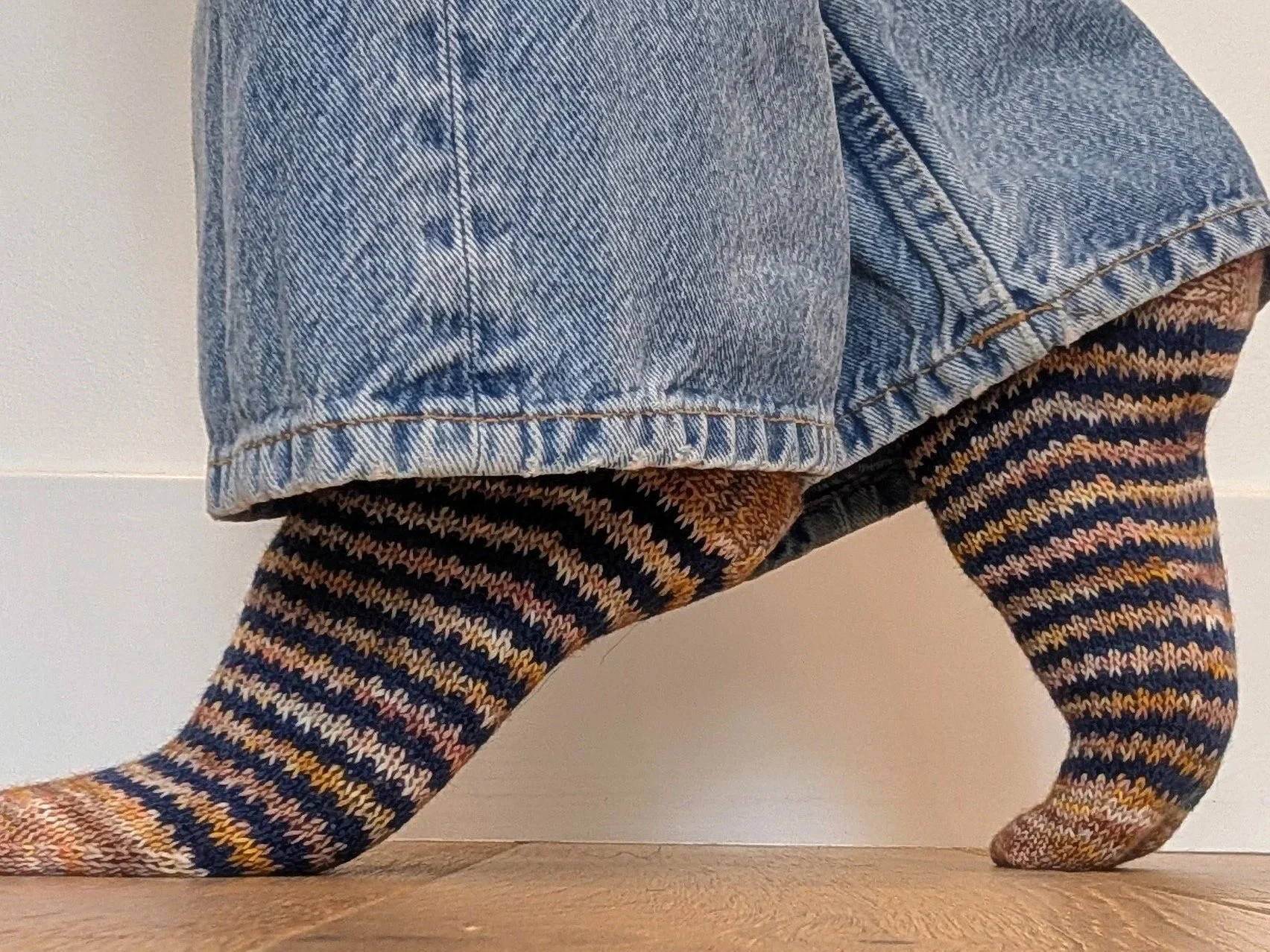
The Frosted Stitch: Christa dyes beautiful yarn on both SW and NSW bases. For her SW bases, I recommend Snowflake Sock and Deep Freeze DK. For NSW, her Nordic NSW in fingering and DK weights.
Shown Below: Bigfooting Around knit using Valley of the Kings sock set.
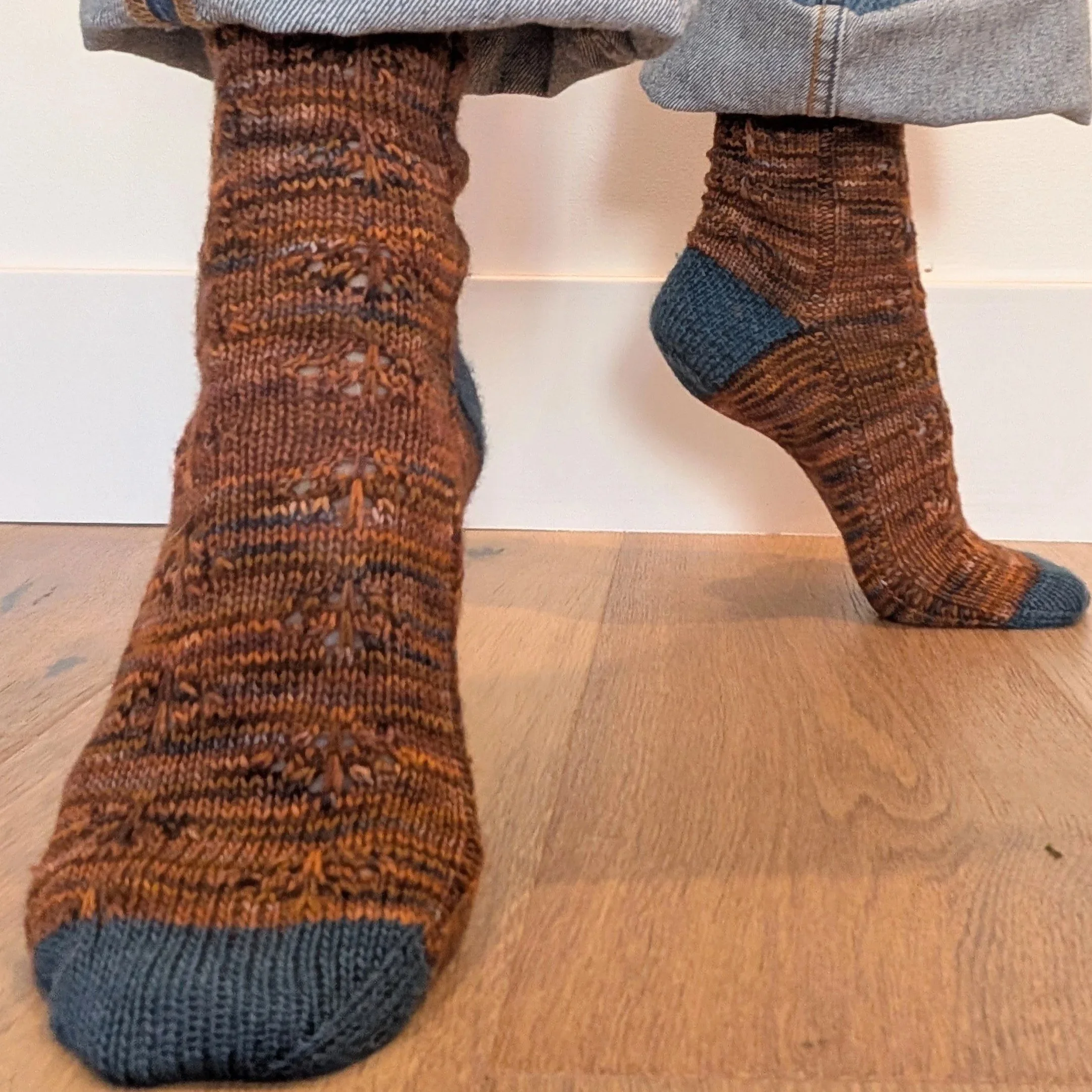
Bad Sheep Yarn*: Marcie makes beautiful hand dyed SW yarns that are 75% merino/25% nylon. I recommend both her fingering and DK Weight yarns.
Shown below: Quietstep Socks knit in the Turncoat sock set*.
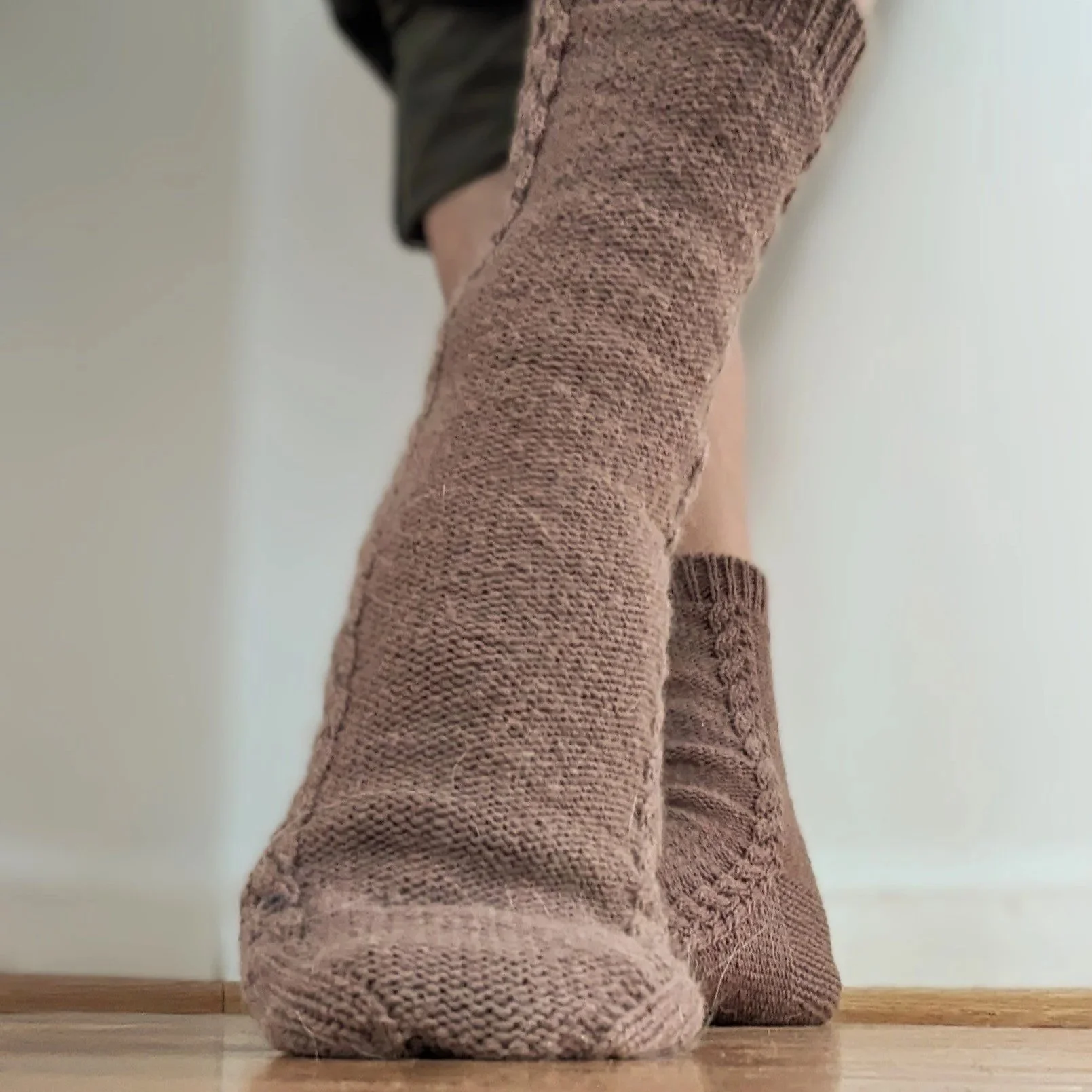
Wool and Palette: Emily specializes in natural hand dyed NSW wool. I recommend the Shaniko blend in fingering, DK, and Worsted weights.
Shown below: Clever Cable socks in Shaniko fingering weight yarn.
*affiliate link. I may receive compensation if you make a purchase.