

A tale of two sweaters
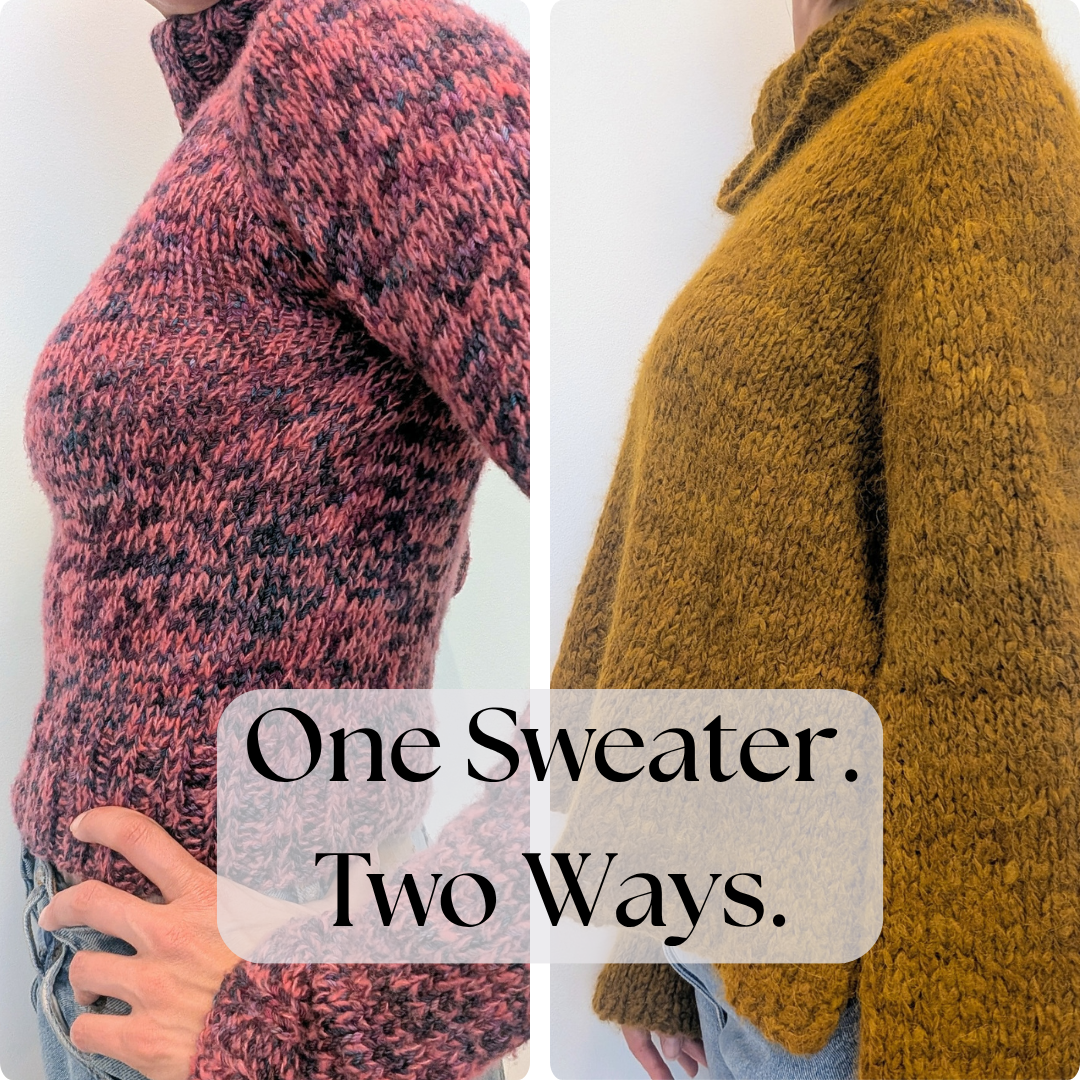
I made the same sweater pattern twice — Bun Break Sweater by Hook Mountain Handmade.
Same pattern. Completely different outcomes. Let’s talk about how that happened because this is how you learn to make changes to your own sweaters.
First, what’s the same about the two sweaters?
The base pattern.
The gauge.
The overall yarn weight.
What’s different?
The size I selected.
The drape of the fabric.
The sleeve construction.
The body construction and length.
The needle size I used.
So… basically everything that actually makes a sweater feel like your sweater.
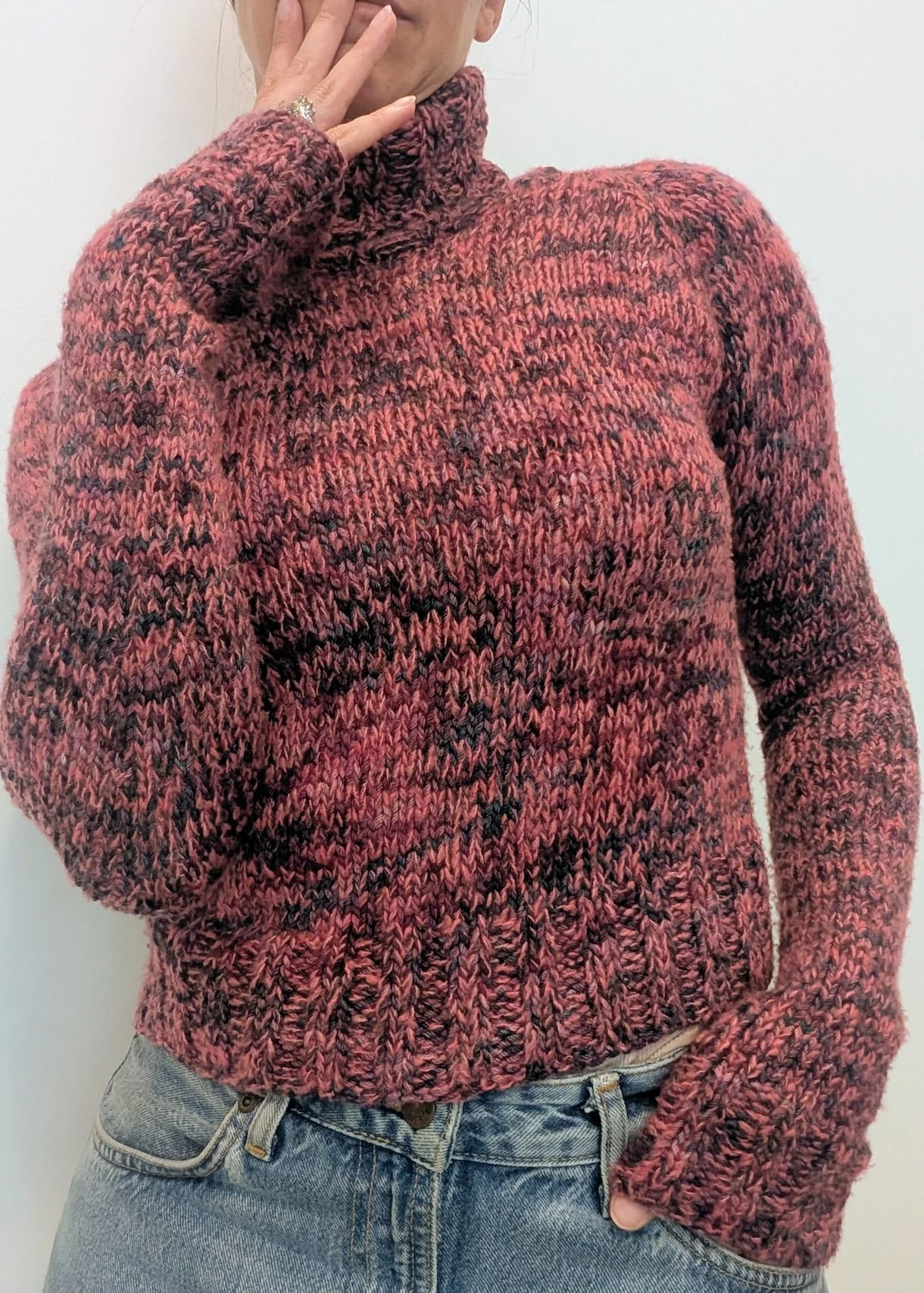
For the marled pink and purple version, I used US 9 / 5.5 mm needles. The yarn is DK weight merino held together with fingering weight suri alpaca. I lengthened the neckline beyond the pattern’s recommendation and incorporated gradual stitch decreases throughout the sleeves and body to create a more tailored, fitted form.
This needle and yarn combination gave me the correct gauge for the pattern — but it created a denser fabric overall. The merino brings elasticity and structure, and knitting it slightly tighter reinforces that structure.
The result? A much more architectural sweater. It holds its shape and feels intentional.
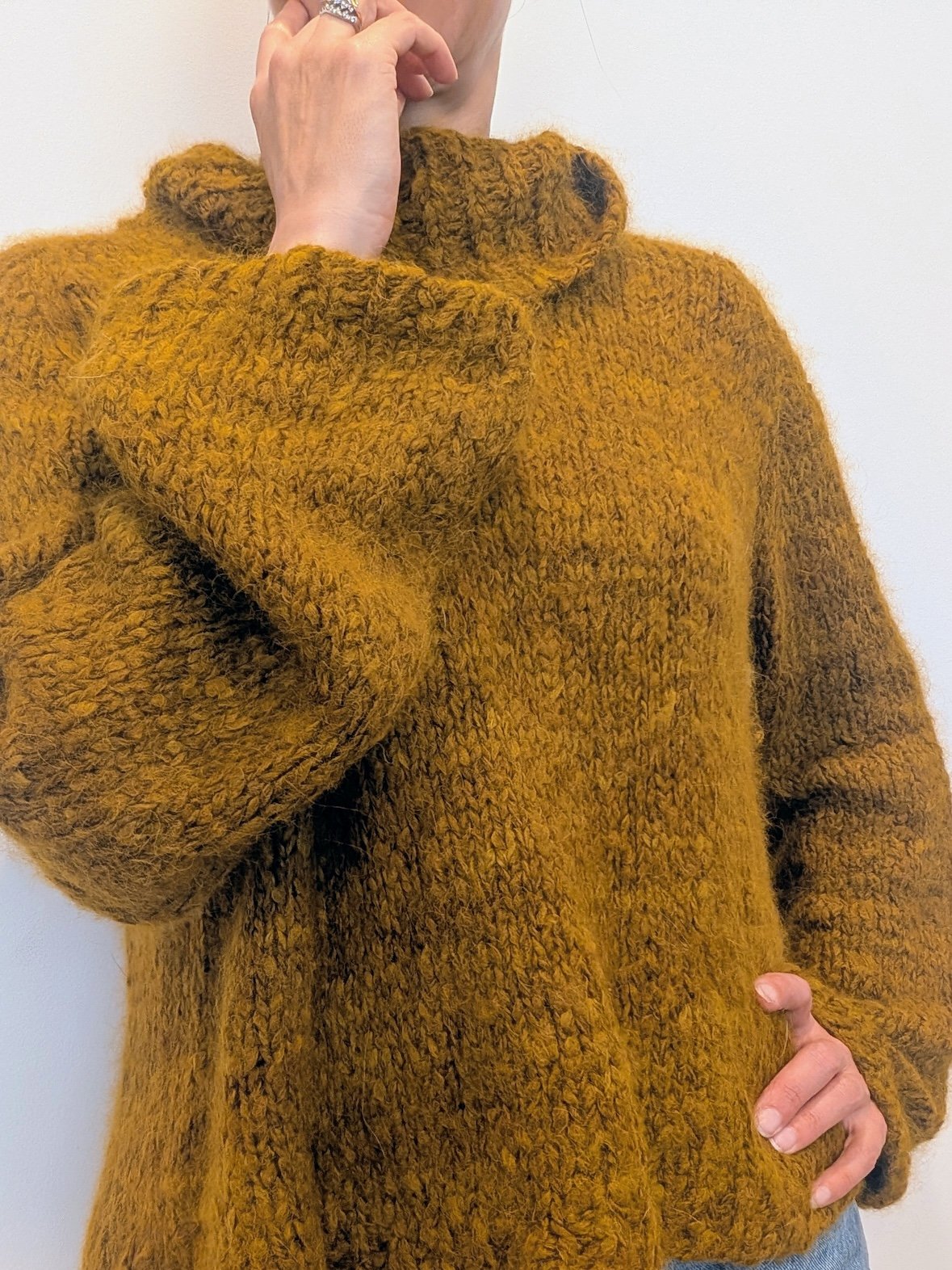
For the green sweater, I used US 10 / 6.0 mm needles (the size called for in the pattern). The yarn is a DK-weight suri alpaca held together with a fingering weight merino/nylon blend. The neckline on this version is shorter — though still longer than the pattern specifies. I also worked both the sleeves and body straight, skipping all shaping, to create a looser, more fluid silhouette.
Again, I met pattern gauge. But the fabric is dramatically drapier.
Suri alpaca has very little elasticity and a silky, fluid quality. It doesn’t “snap back” the way wool does. Even when blended, it tends to create fabric that relaxes and flows rather than holds structure. When you combine that with a larger needle and a slightly larger size choice, you get a sweater with much less structure and much more movement.
Same gauge. Completely different vibe.
Why do we care about any of this?
Because the more you know, the more you’ll be able to take a pattern and make it YOURS.
Gauge isn’t everything. Hitting stitch gauge means you should get a sweater with measurements that match the pattern. This is the math.
Fiber content isn’t everything. But fiber content and fabric density determine how that math behaves on a body. When you substitute yarn, you’re not just matching weight and gauge. You’re choosing:
Structure vs. drape
Elastic vs. fluid
Memory vs. relaxation
Crisp vs. soft-edged
Merino wool (especially in DK weight) has elasticity and resilience. It holds shape well and bounces back after stretching. Knit it a bit more densely and it creates a stable, structured fabric.
Suri alpaca, on the other hand, has a smooth, silky handle and minimal elasticity. It’s warm and beautifully soft, but it tends to grow and drape because it lacks the natural “memory” of wool. That’s why it’s often held together with another yarn — to add stability and durability.
None of these qualities are good or bad. They’re elements to consider when choosing your yarn. The more you understand about all the elements that go into knitting a garment, the more control you have over your finished object. Even when you’re using the exact same pattern twice. Or thrice. (I’m pretty sure I’ll be making this one again.)
And that, friends, is the fun part.
Ready to give this experiment a try? Maybe you want to start with something a little simpler? How about the Facet Falls Shawl? Grab some DK weight yarn and knit up a large swatch (say 24” x 24”) using the needles recommended in the pattern. Then knit it again using size 4.5mm/7 US needles and try to match the size of your first swatch. Soak them both and then compare them. You’ll find the same beautiful design but the smaller needles will give you a more structured, denser fabric than the original design intended. If you were to knit the full shawl using the smaller needles, it would also be smaller overall. But maybe you’ll like it better that way. You’ll never know until you dive in.
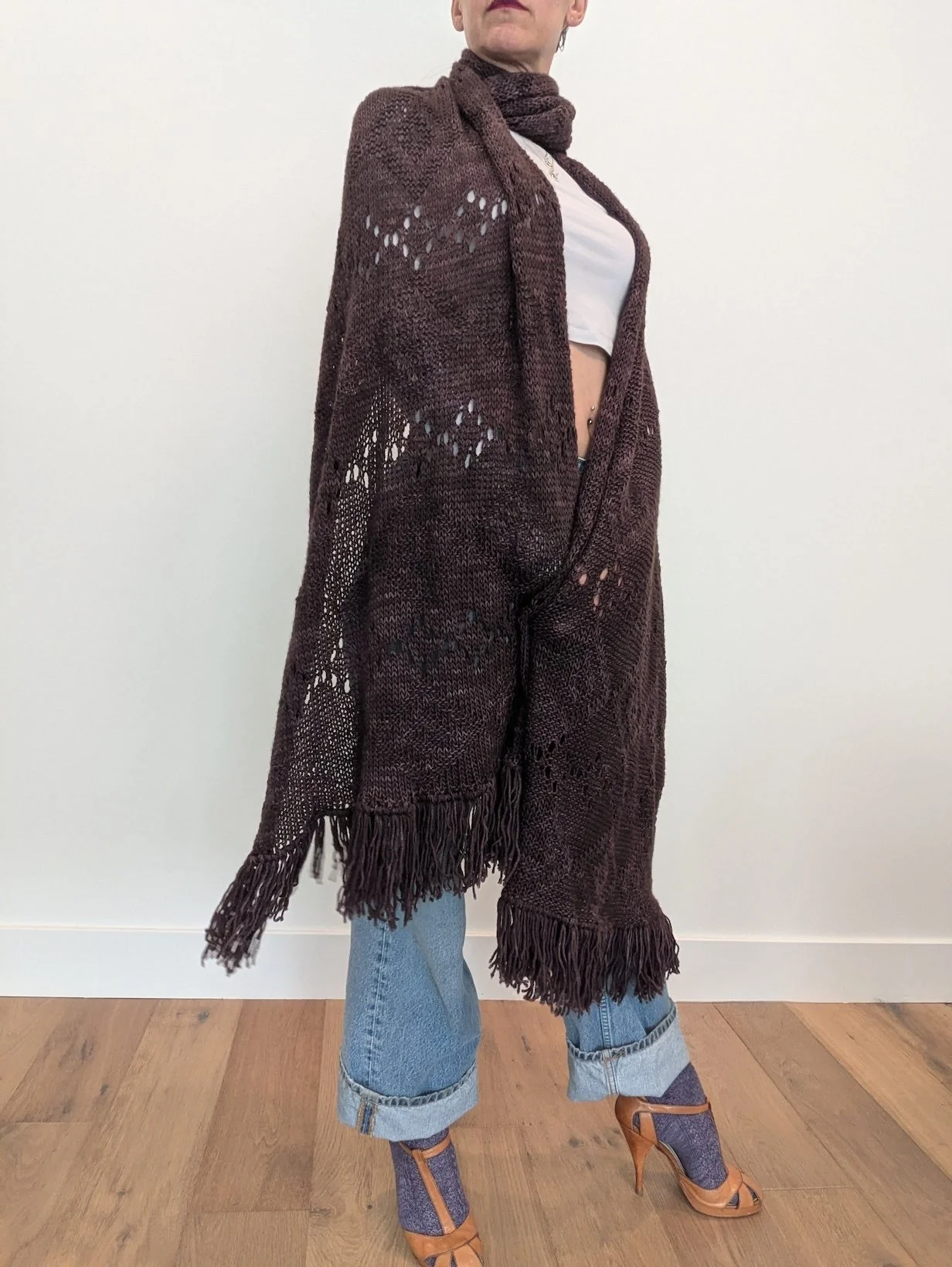
The Facet Falls Shawl pairs beautifully with the Choose Your Own Knitventure Socks. At least, I think it does. And maybe I’m biased.