

Four Ways to Yarn Over (and When to Use Which)
Most knitting patterns just say "yo" and expect you to know what to do. But if you’ve ever ended up with a hole that looks more like a structural failure than a design choice, you know it’s not always that simple. Depending on what stitches are flanking that yarn over, the technique changes.
Here are the four ways to do it without losing your mind:
1. Knit to Knit
The standard. You’re knitting, you bring the yarn to the front between the needles, then wrap it over the right needle to the back to knit the next stitch. Simple, and yet I did this wrong for thirty years. Thank you YouTube and video tutorials!
2. Knit to Purl
This one trips people up. Since you need the yarn in front to purl anyway, you have to wrap it all the way around the right needle—front to back and front again—to create the actual loop before you purl.
3. Purl to Purl
You’re already in the front. Wrap the yarn over the top of the right needle to the back and bring it right back under to the front so you’re ready for that next purl stitch.
4. Purl to Knit
The easiest of the bunch—and somehow the easiest to lose if you’re knitting English style. It feels like cheating because the yarn is already in the front, but don't let that fool you into dropping it. To work this one, hold the yarn up and over the right needle, and then knit the next stitch. Simple, but stay alert or it'll vanish.
Once you see the logic of where the yarn starts and where it needs to end up, these become muscle memory. If you're more of a visual learner (or just want to make sure you aren't dropping that Purl to Knit stitch), I've got a quick tutorial for you!
The Diamond Gusset: This one really shines with colorwork. By centering the decreases on the sole of the foot, you can cinch the fit without interrupting the beautiful patterns on either side of the sole of your foot.
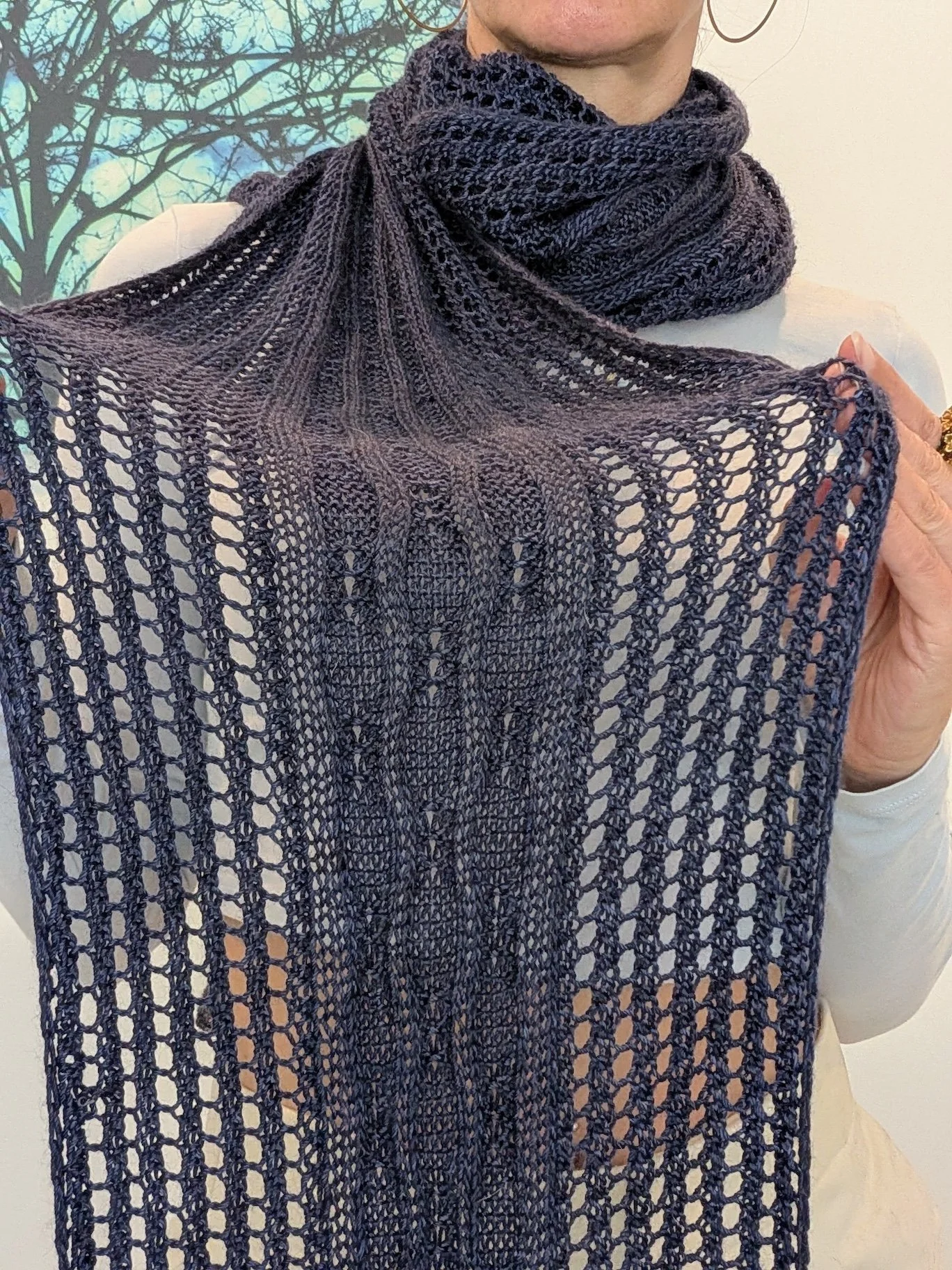
Put these stitches into action with the Arcade Shadows scarf. A dramatic, floor-skimming showstopper that features sections of simple lace and structured cables.