

Shaping the Perfect Sock: Why the Arch Matters
Knitting socks that fit well shouldn’t feel like luck or magic—but for many, it usually does.
Picking the right size and nailing gauge and ease are the first steps to knitting a sock that fits. But the real secret is in the shaping. While there are several areas of a sock that can be customized with shaping techniques, today I’m focusing on arch shaping.
Most cuff-down, heel-flap-and-gusset patterns treat the foot as a 'one size fits all' tube. We do the work to ensure the sock fits over our heel and instep, but we rarely use the gusset decreases to their full potential. When we skip arch shaping, we lose the benefit of negative ease. Rather than cinching the sock in to follow the curves of the foot, the tension pulls the fabric into a straight line, which is how you end up with that 'drum skin' effect under a high arch.
For those of us with high arches, decreasing along the sides of our feet, as we do with a standard gusset technique, leaves the fabric loose under the middle of our feet. In technical terms, this is called "bridging." Because the fabric isn't actually touching your skin in the hollow space of the arch, the negative ease can't do its job. Instead of hugging your foot, the sock just stretches across the void, which is why some people feell that annoying "sock sag" or find the heel shifting around inside your shoe.
I didn’t invent these techniques, but I’ve spent a lot of time honing the instructions to make them as clear as possible. These methods move the shaping into the mid-foot, actually tailoring the "waistline" of your sock:
The Double Gusset: This is a great technique for single-color patterns where you want a snug, symmetrical hug under your arch. By working the decreases in two sections, the gusset cinches fabric into your arch in two locations, creating a wonderfully snug fit.
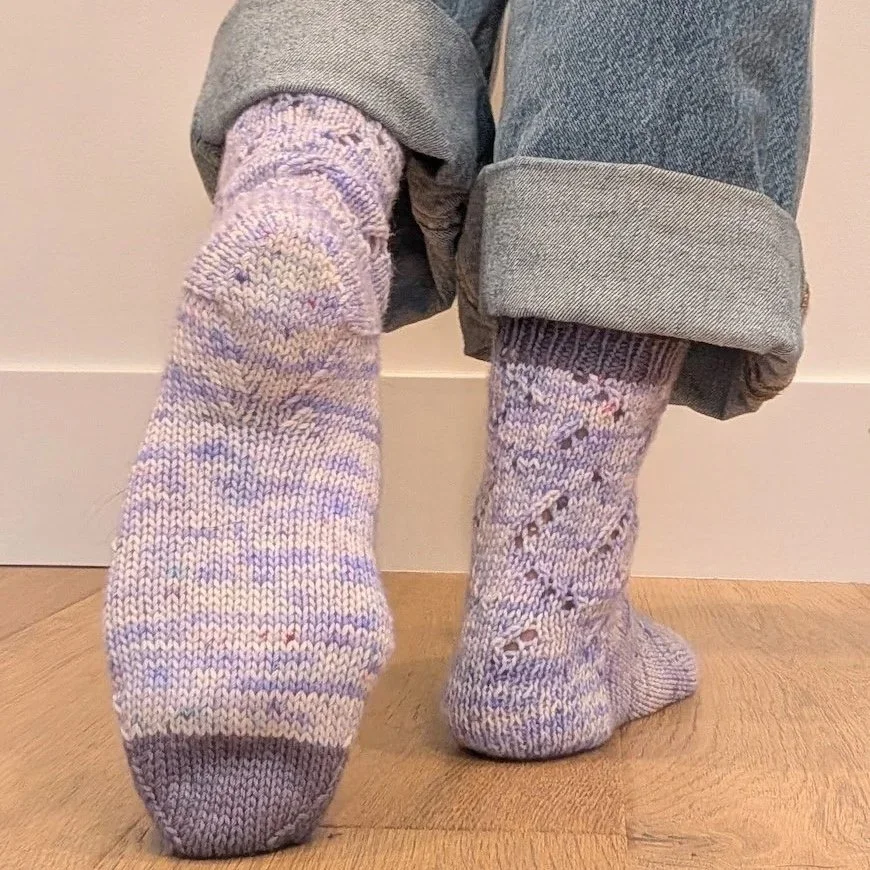
The Between Showers Sock Knitting Pattern features a Double Gusset.
The Diamond Gusset: This one really shines with colorwork. By centering the decreases on the sole of the foot, you can cinch the fit without interrupting the beautiful patterns on either side of the sole of your foot.
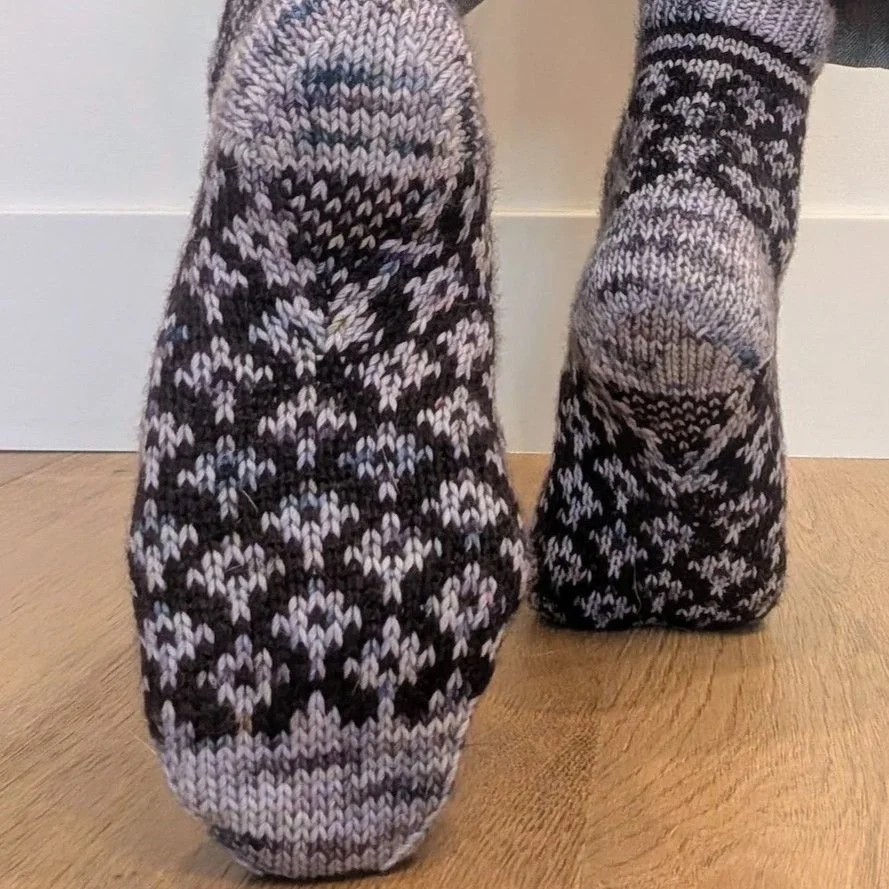
The Hinterfolk Sock Knitting Pattern features a Diamond Gusset.
By using these gussets, you have the opportunity to cinch the sock in at your heel and truly contour it to the arch of your foot. It turns the sock from a simple tube into a garment that actually maps to your skeletal structure.
I’ve created tutorials for both techniques, and since these are my first longer-form tutorials, I would love to hear what you think!