

Beautiful Socks are Useless if They Don't Fit Your Foot
4 Ways to Fix Tight Colorwork
There is nothing worse than knitting a cuff-down sock, getting all the way to the heel, and realizing this sock ain’t gonna make it over your ankle.
I can feel the disappointment just typing that sentence. This is one of those missteps that convinces people to either never knit another sock or never knit another cuff-down project again. So, let’s avoid that if we can, shall we?
Why Does It Happen?
It’s pretty simple, actually. The fabric you create with stranded colorwork is denser and less elastic than standard stockinette. Two main factors cause this:
Small Circumference Tension: Knitting in a small circle can naturally increase your tension, creating a tighter weave overall.
The Double Layer: Colorwork creates a "double-layered" fabric consisting of the stitches and the floats. This is inherently more dense and therefore less stretchy.
The end result is an interior circumference that is reduced compared to a single-color sock. To get that sock over your heel, you need much less negative ease than you might expect.
In this article, I’ll focus on four techniques that will help you achieve a clean, well-fitted colorwork sock.
1. Choose the Right Size
The first technique is the simplest: Size up. Socks are generally knit with negative ease. The stretch of the fabric provides the stability needed to keep them from twisting or falling down. Because colorwork is so structured, it doesn't need that same negative ease to stay in place. In fact, negative ease is exactly what will keep the sock from fitting over your ankle.
Aim for neutral ease, meaning the finished measurement of the sock matches the actual measurement of your foot. Pro-tip: Measure around the widest part of your foot (the ball of your foot). If your foot measures 9 inches, choose the sock size that is also 9 inches, or as close to 9 inches as the pattern provides.
2. The Strategic Needle Swap
If your colorwork is tighter than average and neutral ease isn't doing the trick, try sizing up your knitting needles. This works because larger needles create larger stitches (a larger gauge), which in turn increases the circumference of the sock.
I recommend starting one needle size larger than the pattern suggests. If you know you’re a very tight colorwork knitter, try starting two sizes up. You can increase further than this, but pay attention to the density of the fabric. If you start seeing gaps between stitches or the fabric becomes translucent, you’ve gone too far; the fabric won't be durable enough for a sock. Not to worry! You can combine this technique with a larger pattern size and find success.
One caveat: You only want to size up for the colorwork sections. Switch back to your smaller needles as soon as you finish the last colorwork round and move into your heel construction, and keep them for the plain stockinette toe.
3. Stretch as You Go
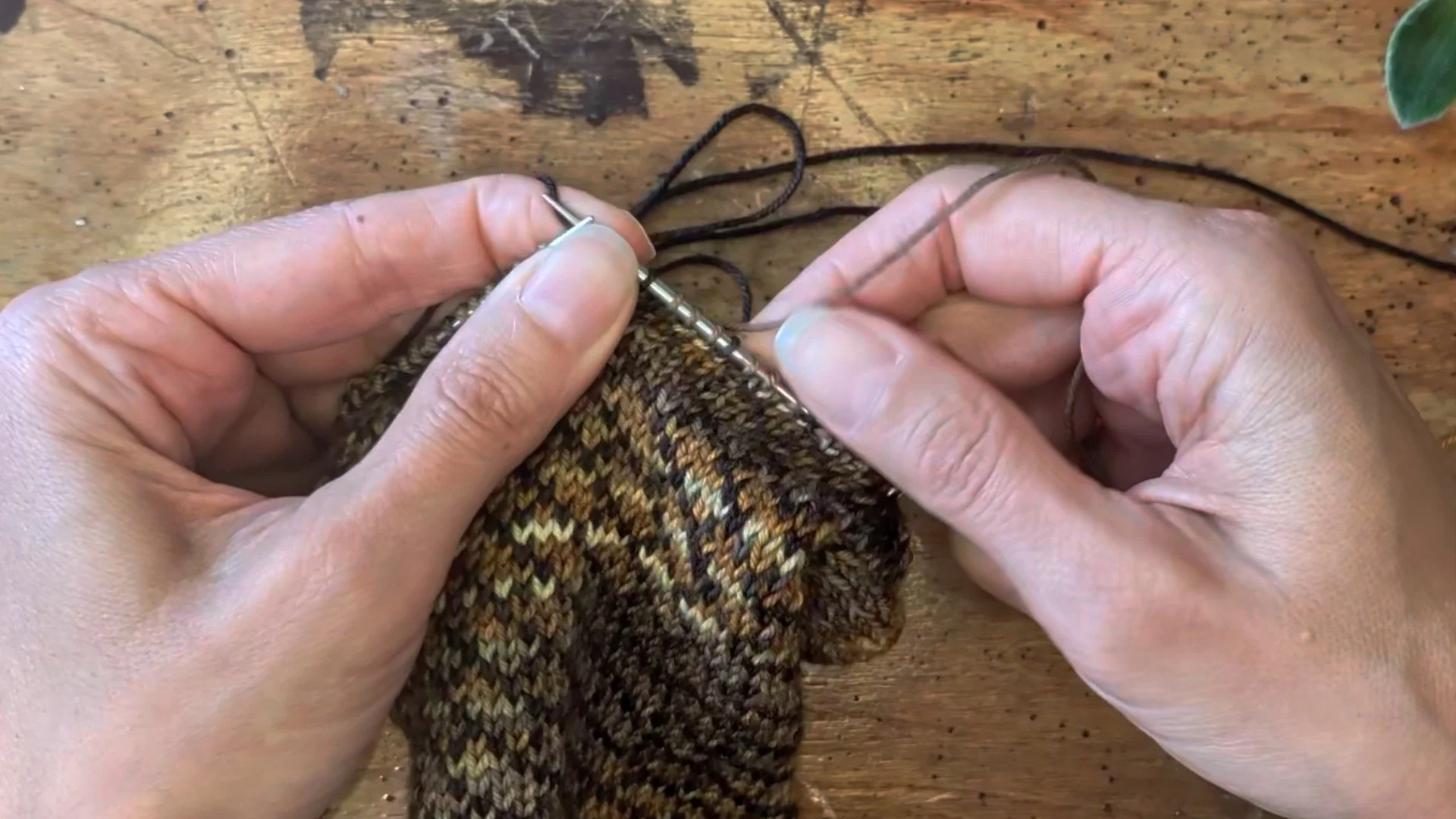
Next, try stretching out your stitches across your right needle at every color change. Floats are only as long as the space they cover. If your stitches are bunched together on the needle, the float will be too short to stretch later.
Every time you switch colors—even for a single stitch—manually slide and stretch the worked stitches along the right needle. This creates a relaxed float that matches the true width of the fabric when stretched. The result is balanced tension that allows the fabric to expand over the widest part of the foot.
4. Knitting Inside Out
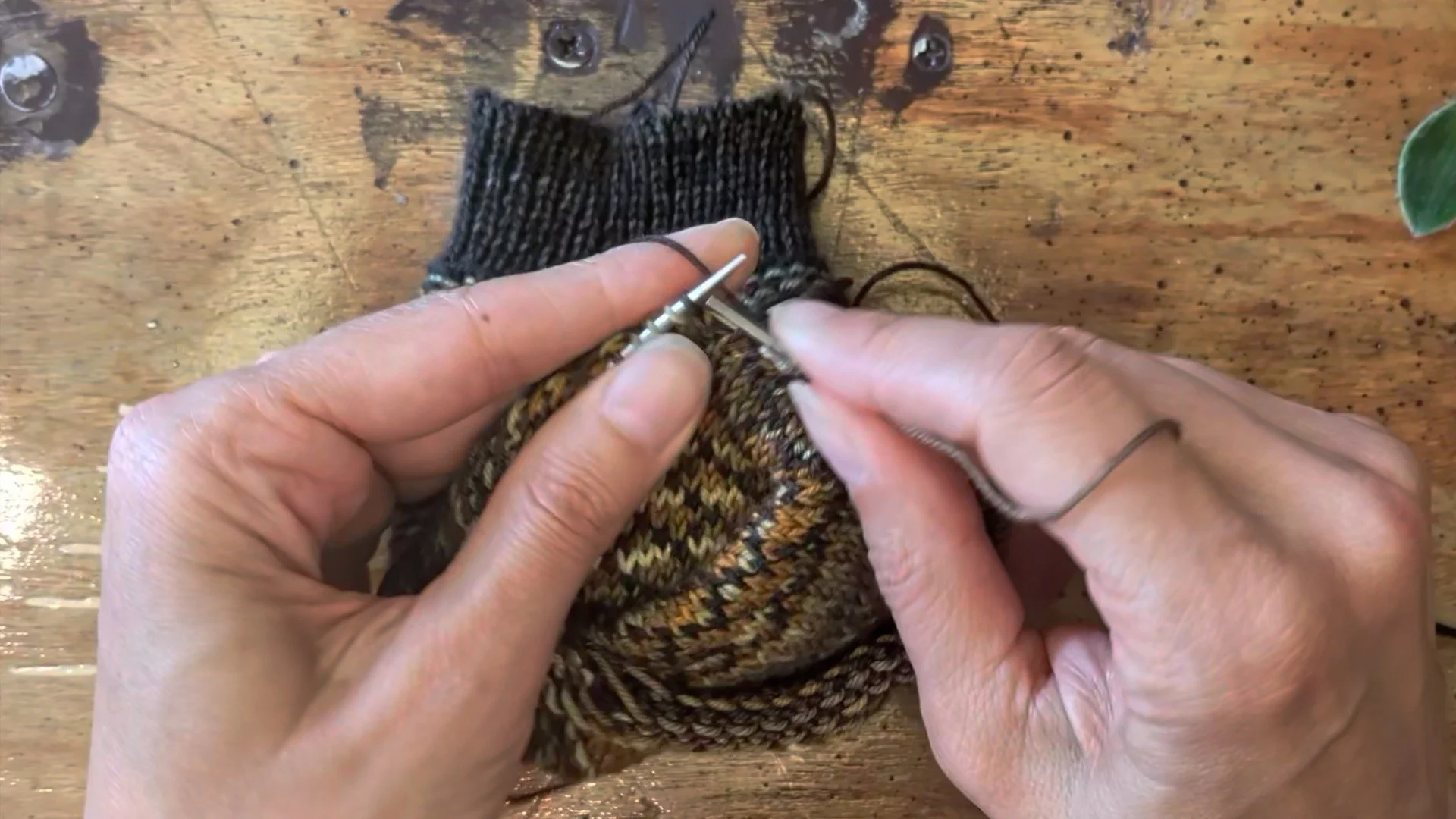
The last technique is the one that sounds the most technical and—frankly—the scariest: knitting inside out. In circular knitting, the outside circumference is slightly larger than the inside. By knitting inside out, your floats travel along the outer edge of the curve.
Simply push the sock through the center of the needles so the "wrong side" is facing out while you knit. If you think of your knitting as a clock face, the biggest change is that your needles will no longer be held at 6 o’clock (the side closest to you); they’ll be held at 12 o’clock (the side furthest away).
This shift is key because it keeps the working yarn on the outside of the tube rather than inside the "well," allowing the floats to naturally stretch further to accommodate the outer arc. Other than that, you work your stitches exactly as you always do, from right to left.
Need a Visual?
For additional help understanding these last two techniques—the stretch and knitting inside out—I’ve put together a short YouTube tutorial.
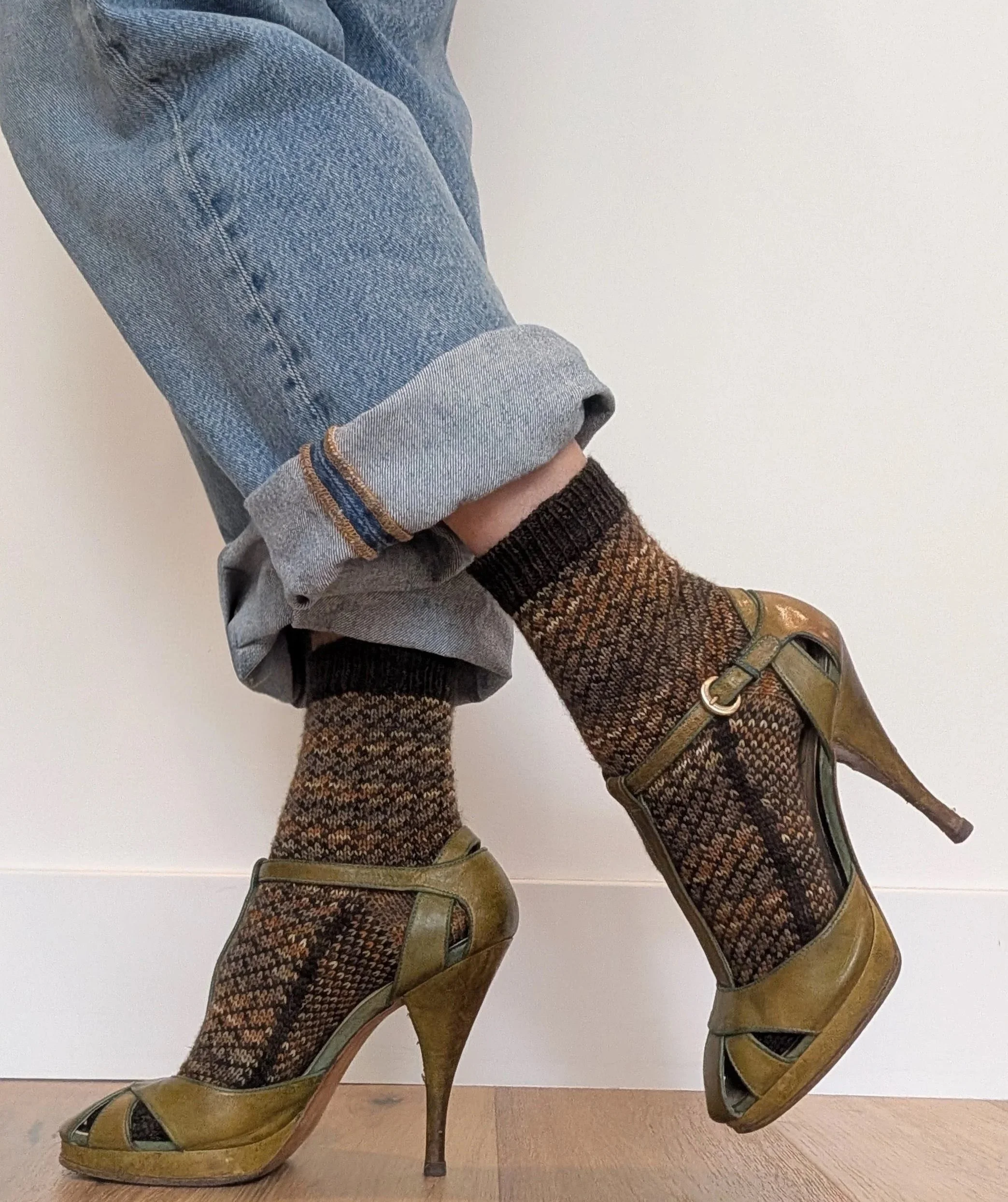
Ready to give these techniques a try to see if they fix your colorwork tension? Grab the Flickerstep pattern, a couple skeins of fingering weight yarn, and your needles, and let’s go!